Multi-Target Drug Discovery Strategies for Alzheimer's Disease: Advances in Computational Pharmacology and Structure-Based Design
Keywords:
- Multi-Target-Directed Ligands; Alzheimer's Disease; Computational Pharmacology; Molecular Docking; Network Pharmacology; Structure-Based Drug Design; Polypharmacology; Acetylcholinesterase; Bace1; Gsk-3beta
Abstract
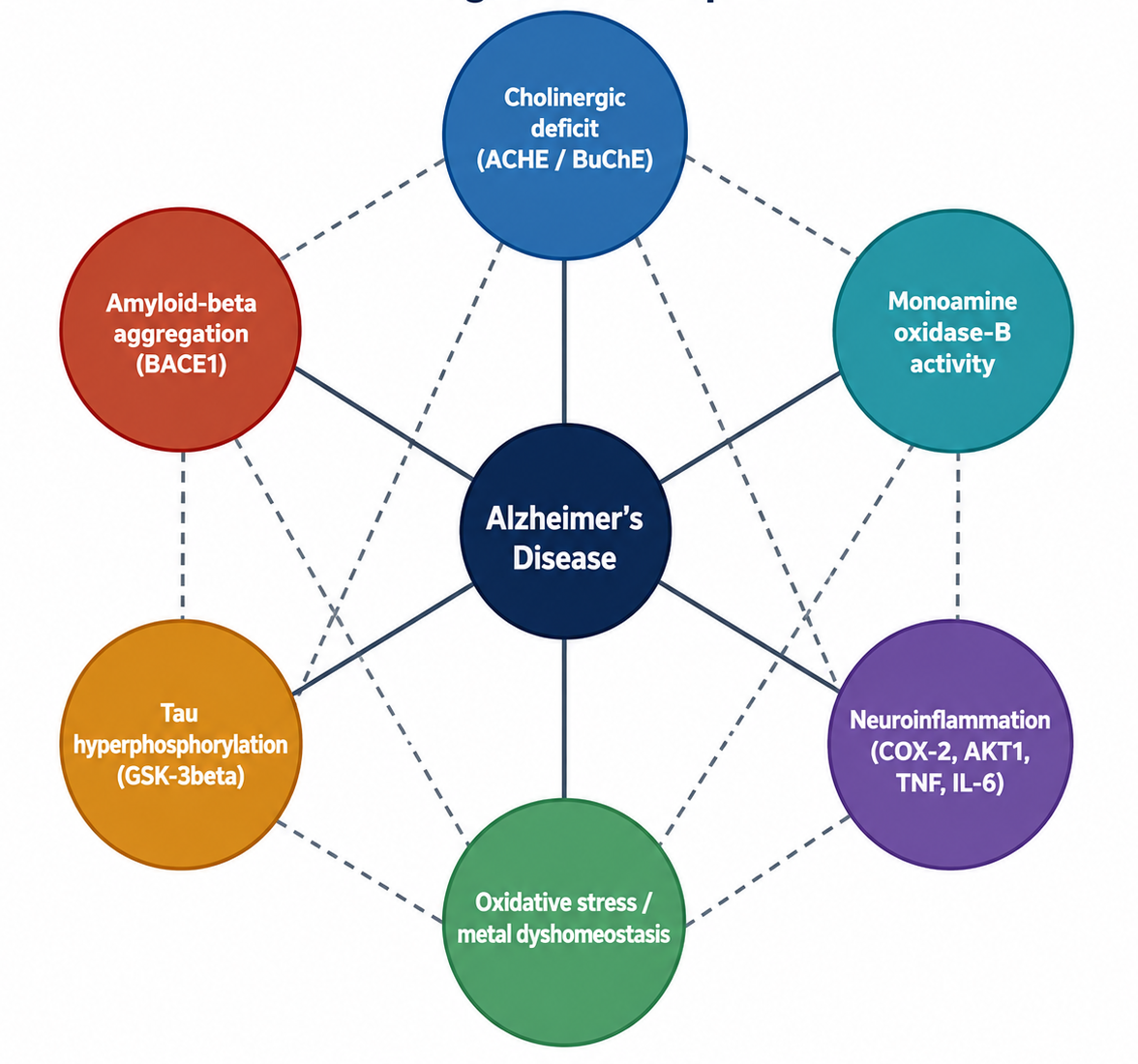
Alzheimer's disease (AD) is a multifactorial neurodegenerative disorder in which amyloid-beta accumulation, tau hyperphosphorylation, cholinergic deficit, oxidative stress, metal dyshomeostasis, and neuroinflammation act in concert rather than in isolation. Decades of experience with single-target agents-most recently amyloid-clearing monoclonal antibodies-have shown that modulating a single node in this network yields, at best, modest clinical benefit. This has catalysed a shift toward multi-target drug discovery, an approach that seeks to engage several disease-relevant targets simultaneously, either within a single chemical entity (a multi-target-directed ligand, MTDL) or through rationally justified combination therapy. This review examines the computational pharmacology and structure-based design methodologies that now underpin multi-target AD drug discovery. We describe the pharmacophore fusion, merging, and linking strategies used to construct MTDLs; survey the principal molecular targets being combined, including acetylcholinesterase and butyrylcholinesterase, beta-secretase (BACE1), glycogen synthase kinase-3beta (GSK-3beta), monoamine oxidase, amyloid-beta and tau aggregation, metal ions, and neuroinflammatory mediators; and detail how molecular docking, molecular dynamics, fragment-based design, network pharmacology, and machine learning are integrated to identify and optimise multi-target candidates. Representative case studies-spanning synthetic dual cholinesterase inhibitors, fragment-based BACE-1/GSK-3beta dual inhibitors, and network-pharmacology-guided natural product leads-illustrate how computational pharmacology accelerates hypothesis generation and lead prioritisation in this space. We conclude by discussing the persistent challenges of balancing potency, selectivity, and druglikeness across multiple targets, the complexity of predicting central nervous system pharmacokinetics for structurally elaborate hybrid molecules, and the translational and regulatory hurdles that continue to separate promising multi-target leads from approved disease-modifying therapies.
Downloads
References