Antimicrobial Resistance Trends in Staphylococcus aureus Across India: A Six-Year Retrospective Analysis of 40 Antibiotics
Keywords:
- Staphylococcus aureus, antibiotic resistance, India, antimicrobial surveillance, multidrug resistance, public health
Abstract
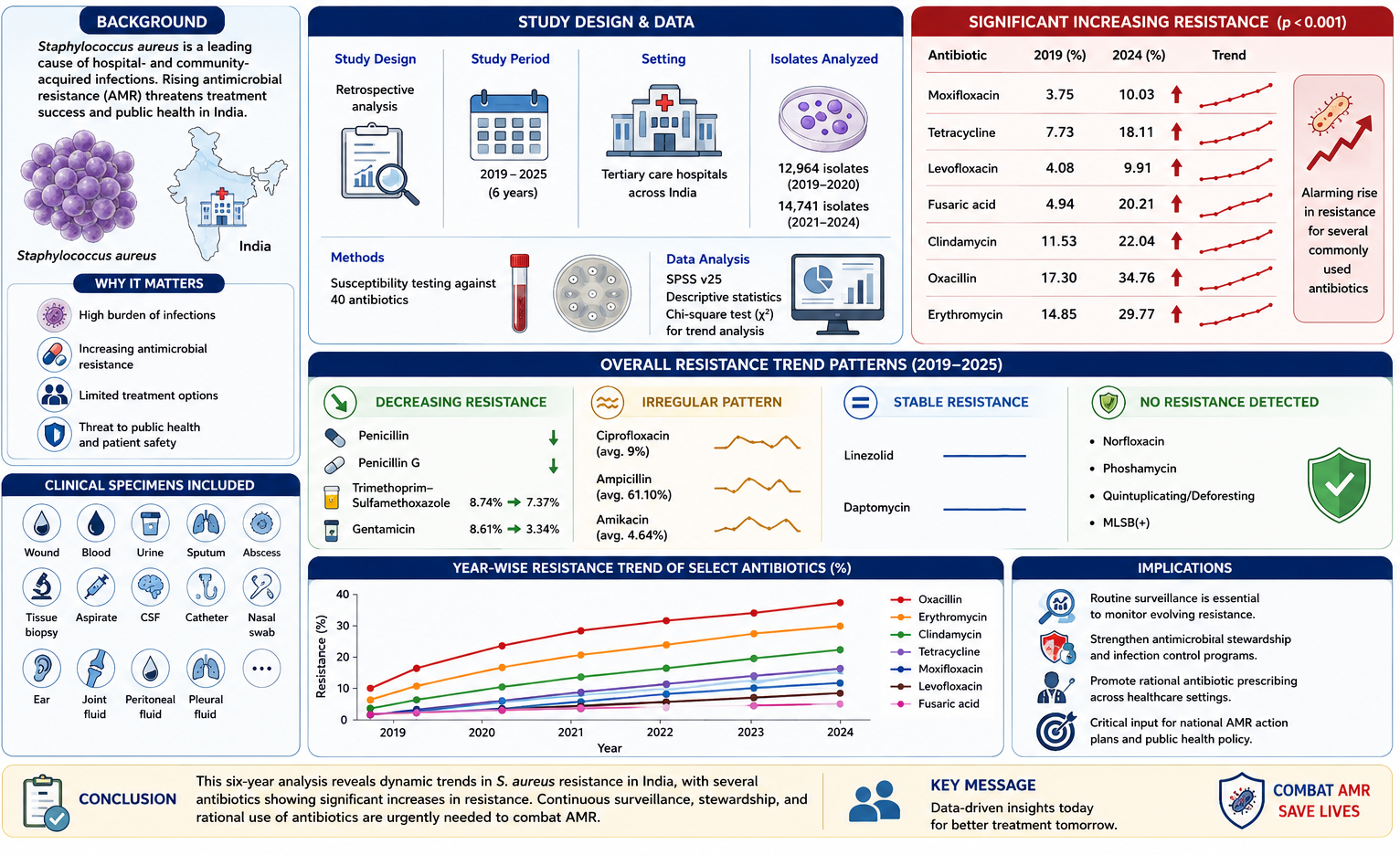
Staphylococcus aureus is one of the most frequently isolated bacterial pathogens worldwide and poses a major clinical challenge due to its rapidly evolving antimicrobial resistance (AMR) patterns. In India, AMR among S. aureus strains has emerged as a public health threat, particularly in hospital-acquired infections. While most surveillance studies in India have focused on a limited number of antibiotics, this study aimed to evaluate the AMR profile of S. aureus against a broad spectrum of 40 antibiotics over a six-year period (2019–2025).This retrospective analysis was conducted using data collected between 2019 and 2024 from clinical microbiology laboratories in tertiary care hospitals across India. S. aureus isolates were tested against a panel of 40 antibiotics. Data were analyzed using SPSS version 25 with descriptive statistics and Chi-square (χ²) test to identify significant trends in resistance over time.A statistically significant (p<0.001) upward trend in resistance was noted for Moxifloxacin (3.75%–10.03%), Tetracycline (7.73%–18.11%), Levofloxacin (4.08%–9.91%), Fusaric acid (4.94%–20.21%), Clindamycin (11.53%–22.04%), Oxacillin (17.30%–34.76%), and Erythromycin (14.85%–29.77%). A decreasing trend was observed for Penicillin, Penicillin G, Trimethoprim–Sulfamethoxazole (8.74%–7.37%), and Gentamicin (8.61%–3.34%). Irregular resistance patterns were recorded for Ciprofloxacin (avg. 9%), Ampicillin (avg. 61.10%), and Amikacin (avg. 4.64%). Linezolid and Daptomycin maintained relatively stable resistance profiles. Notably, no resistance was recorded against Norfloxacin, Phos hamycin, Quintuplicating/Deforesting, and MLSB(+).The study reveals dynamic trends in S. aureus resistance in the Indian context, with several antibiotics showing alarming increases in resistance. These findings highlight the urgent need for routine surveillance, antimicrobial stewardship programs, and rational antibiotic prescribing practices across healthcare settings in India.
Downloads
References