Peptide-Loaded Nanocarriers for Targeted Drug Delivery: Current Advances, Clinical Applications, and Future Perspectives
Keywords:
- Peptide therapeutics; Nanocarriers; Controlled drug delivery; Biomedical nanotechnology; Pharmacokinetics; Clinical translation; Smart nanomedicine; Theragnostic
Abstract
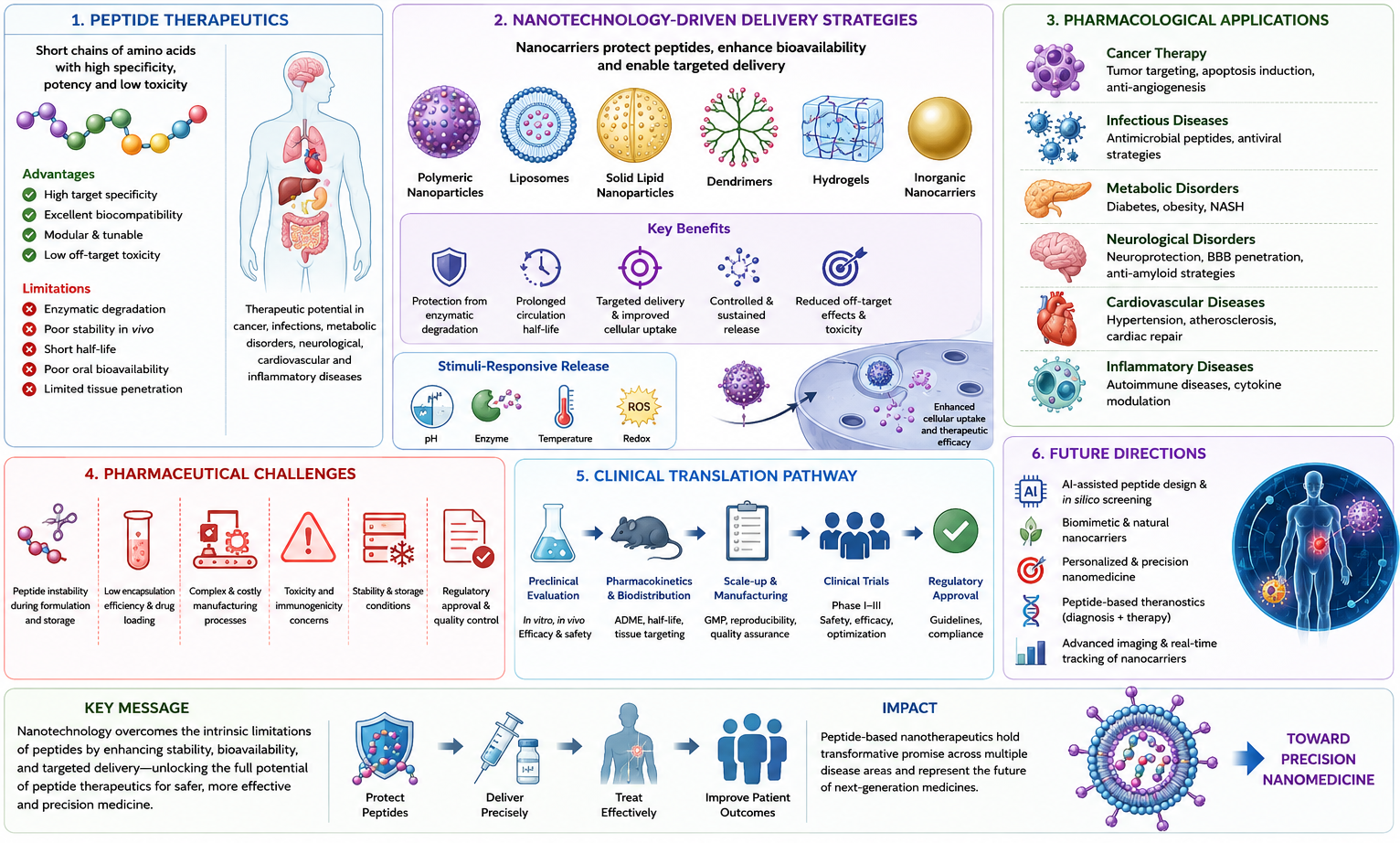
Peptide-based therapeutics represent a potent class of bioactive molecules due to their high specificity and low toxicity as well ability to modulate complex biological pathway. Despite, they have inherent disadvantages (e.g., rapid enzymatic degradation, poor stability, short plasma half-life and insufficient tissue penetrability), which limit their therapeutic potential. Nanotechnology has transformative solutions to these challenges through the encapsulation, protection and targeted delivery of peptide drugs. It provides an overview of all classes of peptide-based therapeutics from a structural diversity perspective and pharmacological significance before examining nanotechnology-led approaches, which aim to further improve their efficacy. This review focuses on the diverse nanoplatforms from polymeric nanoparticles, liposomes, solid lipid nanoparticles, hydrogels, dendrimers to inorganic nanocarriers with respect to their mechanisms enhancing bioavailability, cellular uptake and controlled release.Peptide-loaded nanocarriers has a wide range of pharmacological applications among which may find use in cancer therapy, infectious diseases, metabolic disorders, neurological complications and cardiovascular diseases as well as inflammatory conditions. Even after making great strides in the field, many drug-associated barriers remain like instability of peptides in formulation, loss of encapsulation efficiency, challenges with manufacturing and widespread concerns related to toxicity, storage and regulatory compliance. Here, we further outline major clinical translation efforts and emerging regulatory frameworks of interest while also noting the necessity for detailed pharmacokinetic and biodistribution data. Finally, future perspectives including AI-assisted peptide design, biomimetic nano formulations, personalized nanomedicine and peptide-based theragnostic platforms are discussed. In summary, this review provides an overview of the state of the art, challenges and future directions in peptide nano formulations towards successful clinical translation.
Downloads
References