Rational Design of Polymer-Based Drug Delivery Systems for Enhanced Bioavailability and Clinical Translation
Keywords:
- Polymer-based drug delivery systems, Pharmacokinetics, Controlled release, PEGylation, Biodegradable polymers, Smart polymers, Drug targeting, Personalized medicine, ADME optimization
Abstract
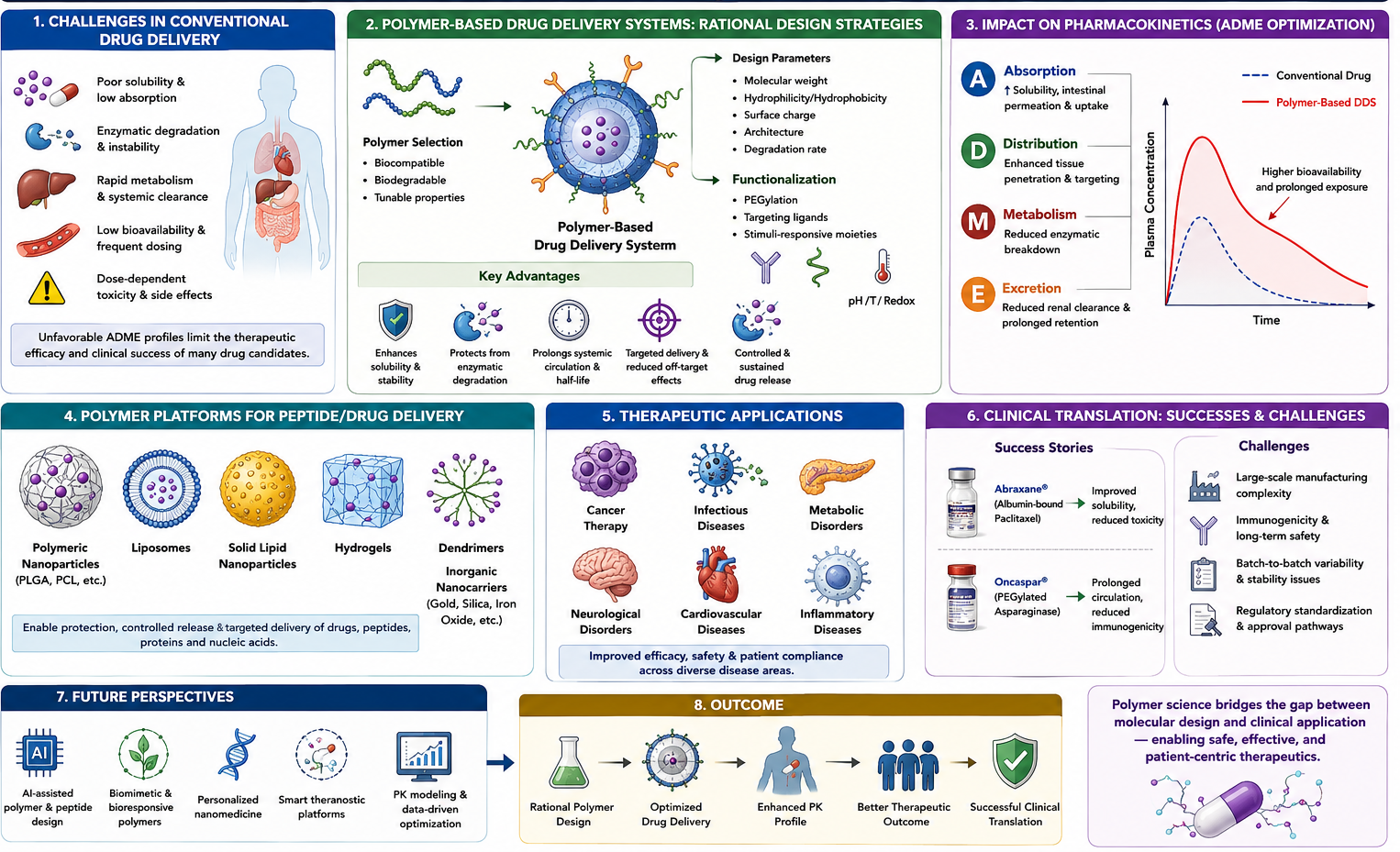
Pharmacokinetic optimization is essential for therapeutic success, although many promising drug candidates fail later in clinical translation due to solubility, stability or bioavailability limitations. Polymer-based drug delivery systems (PDDS) are promising tools to address these challenges through the modulation of ADME characteristics of a therapeutic agent. These systems improve solubility, protect drugs from enzymatic degradation, offer controlled release profiles through rational polymer design to prolong systemic circulation and reduce dosing frequency. A large number of advances, including PEGylation, biodegradable polymers(PLA, PLGA,PCL), and smart stimuli-responsive materials have substantially increased pharmacokinetic profiles over a wide variety of therapeutic classes. Additionally, polymer–drug conjugates, micelles, nanoparticles and hydrogels facilitate localized delivery to the desired site of action while reducing off-target effects and increasing therapeutic index. Translational examples, for instance, Abraxane® and Oncaspar®, highlight the clinical potential of PDDS; however, challenges remain concerning high-volume manufacturing, lack of immunogenicity assessments and inconsistency in regulatory requirements. The combination of artificial intelligence, bioresponsive polymer chemistry, and modelling the personalized pharmacokinetics represents the next frontier for customizable, patient-centric drug delivery. Overall polymer science is still connecting the dots between molecular design and clinical application, propelling precision therapeutics from bench to bedside.
Downloads
References