Reprogramming Receptor Signaling: Biased Agonism and Functional Selectivity as Emerging Strategies in Pharmacology
Keywords:
- biased agonism; functional selectivity; receptor pharmacology; GPCR; β-arrestin; G-protein signaling; operational model; receptor conformation; allosteric modulation; drug discovery
Abstract
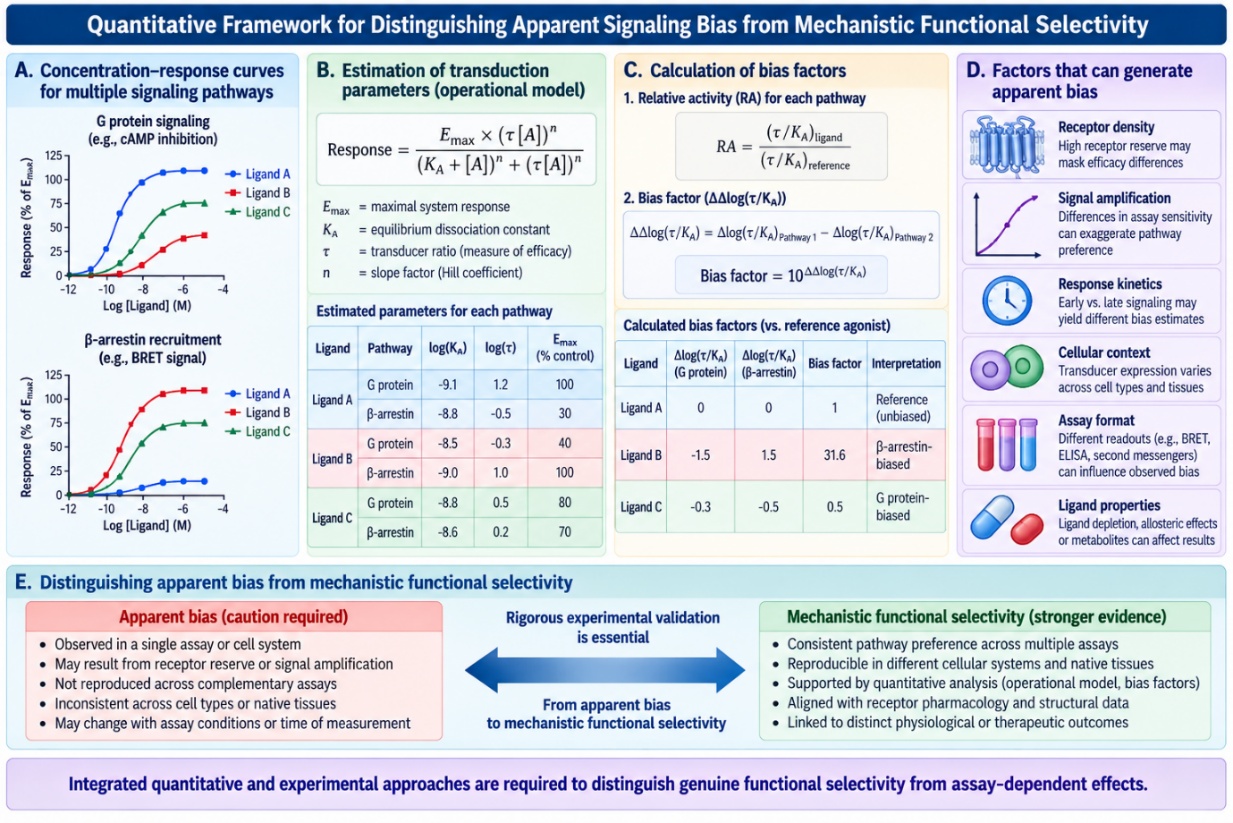
Classical receptor pharmacology has traditionally described ligands according to their ability to activate or inhibit a receptor-mediated response. The recognition that a single receptor can adopt multiple active conformations and engage distinct intracellular signaling pathways has expanded this framework. Biased agonism, also termed functional selectivity, describes ligand-dependent differences in signaling efficacy across pathways. This concept has become particularly important in G-protein-coupled receptor (GPCR) pharmacology, where G-protein coupling, β-arrestin recruitment, receptor trafficking, and intracellular signal organization can produce distinct pharmacological outcomes. This review examines the molecular and pharmacological foundations of biased agonism and functional selectivity, evaluates experimental approaches used to characterize signaling bias, and discusses their implications for receptor-targeted drug discovery and therapeutic development. A structured narrative review was developed using PubMed-indexed literature, primary pharmacological studies, mechanistic investigations, and authoritative methodological reviews. The literature was organized around receptor activation, transducer coupling, operational pharmacology, experimental quantification of bias, receptor regulation, and therapeutic translation. No quantitative meta-analysis was undertaken because the evidence is heterogeneous in receptor systems, assay formats, reference ligands, and pharmacological endpoints. The evidence supports a multidimensional model of receptor efficacy in which ligand structure, receptor conformation, transducer availability, receptor density, and cellular context influence signaling output. Biased agonism has been demonstrated across several GPCR systems, including opioid, adrenergic, dopamine, serotonin, and adenosine receptors. However, apparent bias can arise from receptor reserve, assay amplification, kinetic differences, ligand depletion, and other system-dependent factors. Consequently, pathway preference must be distinguished from experimentally observed assay bias. Although biased ligands offer opportunities to separate therapeutic and adverse effects, the physiological contribution of individual signaling pathways remains incompletely resolved for many receptors. Conclusion: Biased agonism and functional selectivity represent important extensions of classical pharmacology rather than replacements for it. Their greatest value lies in improving the mechanistic understanding of receptor signaling and guiding the development of ligands with deliberately characterized functional profiles. Translation into safer or more effective medicines requires rigorous pharmacological analysis, appropriate reference ligands, multiple assay systems, and evidence that pathway-selective signaling produces a clinically meaningful benefit.
Downloads
References