Advanced Drug Delivery Systems and Nanopharmaceutical Approaches for Oral Squamous Cell Carcinoma: From Bench to Clinical Translation
Keywords:
- oral squamous cell carcinoma; drug delivery systems; nanopharmaceutics; nanoparticles; intelligent hydrogels; mucoadhesive systems; lipid nanoparticles; 3D printing; clinical translation; photodynamic therapy
Abstract
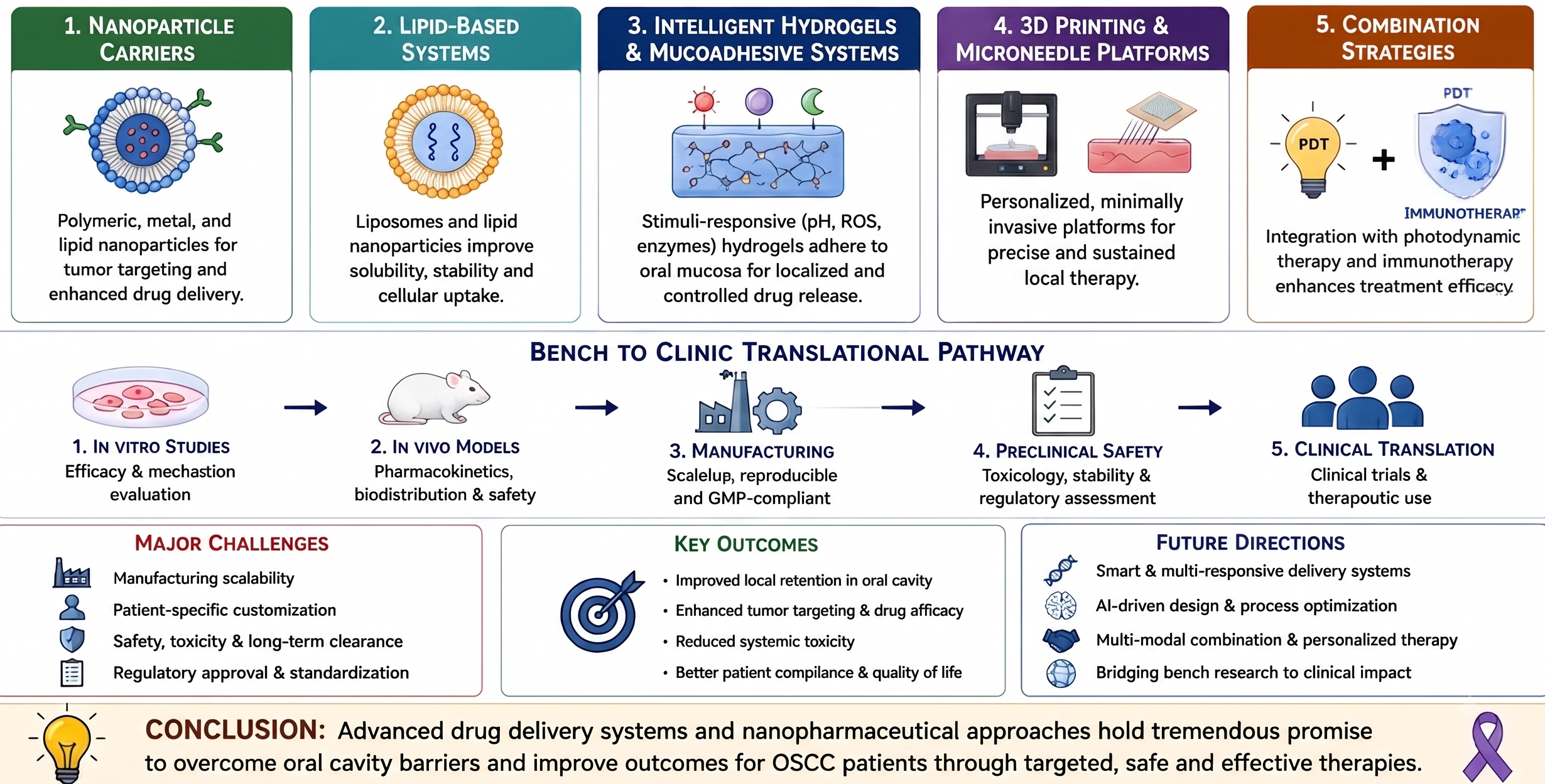
Oral squamous cell carcinoma (OSCC) presents delivery challenges distinct from many other solid tumours, including continuous salivary clearance, mucosal permeability constraints, and mechanical disruption from mastication and speech, which together limit the local retention and tumour-selective accumulation achievable with conventional chemotherapeutic administration. Over the past decade, this recognition has motivated an extensive nanopharmaceutical and advanced drug delivery systems (DDS) literature specifically directed at OSCC, encompassing polymeric and metal nanoparticles, lipid-based carriers, intelligent stimuli-responsive hydrogels, mucoadhesive formulations, and three-dimensional (3D)-printed and microneedle-based platforms. This review surveys this literature with explicit attention to the bench-to-clinic translational pathway, rather than treating preclinical characterisation as an endpoint in itself. We first examine the principal nanoparticle and lipid-based carrier platforms evaluated for OSCC, including their tumour-targeting rationale and reported preclinical efficacy. We then survey intelligent hydrogel and mucoadhesive systems engineered specifically to address the oral cavity's distinctive local delivery barriers, exploiting tumour-specific stimuli such as pH, reactive oxygen species, and enzymatic activity to achieve localised, controlled drug release. We further examine emerging 3D-printing and microneedle-based platforms enabling personalised, minimally invasive local therapy, and combination strategies integrating these delivery platforms with photodynamic therapy and immunotherapy. Finally, we critically examine the translational funnel connecting bench-stage characterisation to clinical application, identifying manufacturing scalability, patient-specific customisation, and safety assessment as the principal bottlenecks constraining progression of this technically sophisticated literature toward regulatory approval and routine clinical use, and we outline priority directions for narrowing this persistent bench-to-clinic gap for OSCC-directed nanopharmaceutical therapeutics.
Downloads
References